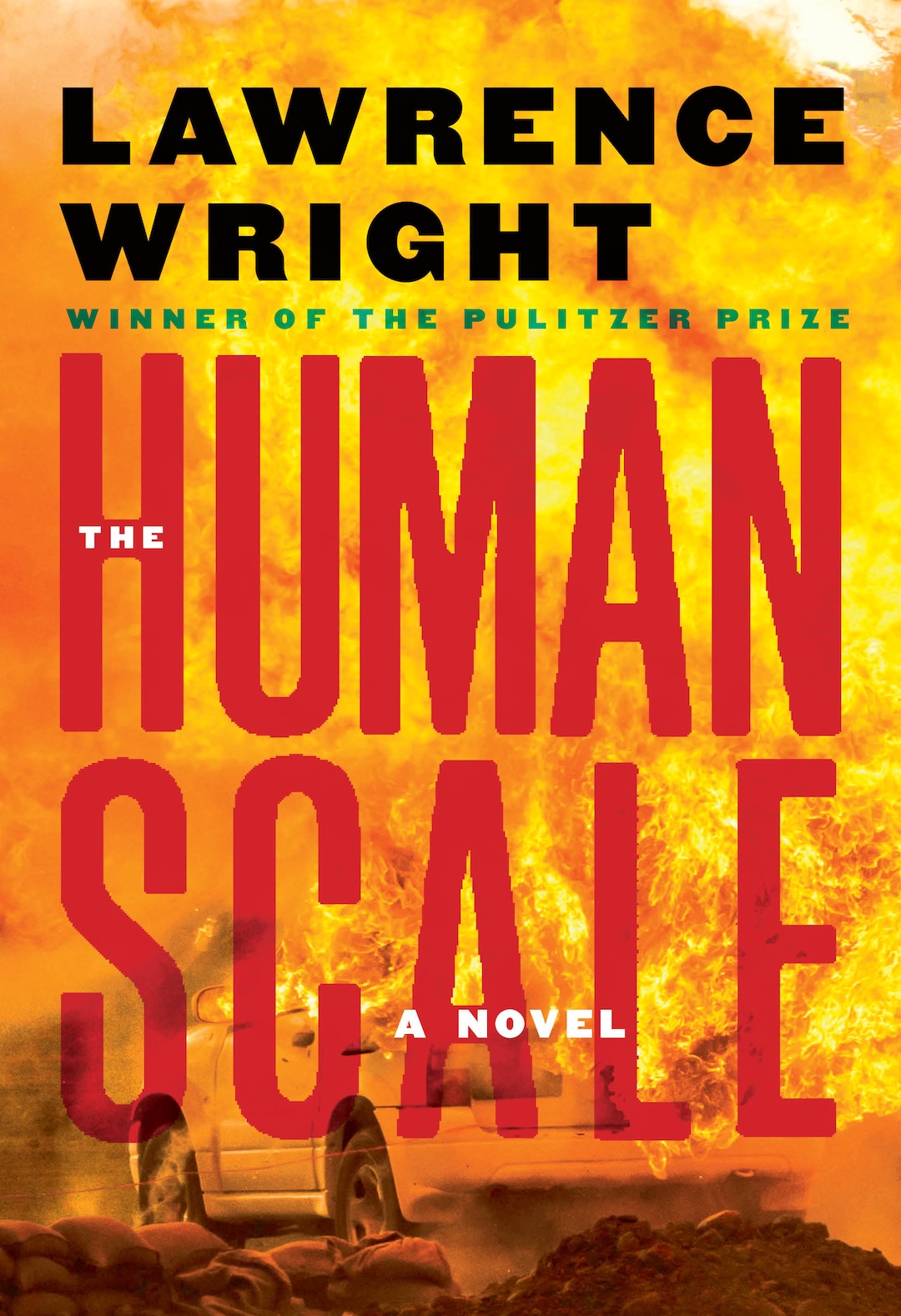
Discussion Questions
1. How does Tony Malik’s dual heritage influence his perspective and actions throughout the novel? Discuss how his background impacts his relationships with other characters, particularly Yossi.
2. The novel explores the complex relationship between Tony, a Palestinian American FBI agent, and Yossi, an Israeli police officer. How do their interactions evolve over the course of the investigation? What factors contribute to their eventual trust in each other?
3. Lawrence Wright populates the novel with a diverse cast of characters, each with their own motivations and backgrounds. Choose one secondary character and discuss their role in the story. How do they contribute to the novel’s themes and plot?
4. The novel is set against the backdrop of the Israeli-Palestinian conflict. Discuss how the historical and political context shapes the characters actions and the overall narrative.
5. The murder of the Israeli police chief serves as the catalyst for the story. How does this event drive the plot forward? What are the key turning points in the investigation?
6. Discuss the significance of the title. How does it reflect the themes and events of the novel?
7. The novel culminates in the devastating Hamas attack on Israel on October 7, 2023. How does this event impact the characters and the resolution of the story? What message do you think the author is trying to convey through this climax?
8. Wright’s novel is described as more than a thriller, offering a nuanced perspective on the Israeli-Palestinian conflict. How does the author balance the thriller elements with the exploration of complex historical and political issues?
9. How do personal relationships and family dynamics play a role in the novel? Discuss how Malik's relationship with his family influences his decisions and actions.
10. What did you find most compelling about the novel?
Were there any particular scenes or moments that stood out to you? Why?
Character Guide
Main Characters
Anthony "Tony" Malik
An American detective from Arkansas with Arab heritage (father: Tariq Abdul Malik). Lost his left eye in a bombing, making him recognizable and often mistaken for Moshe Dayan. Struggles with identity, recently separated from girlfriend Lucy. Travels to Hebron to attend his niece Dina's wedding and becomes involved in a murder investigation.
Dina Abdul Malik
Born 2004, daughter of deceased terrorist Ibrahim Abdul Malik and niece to Tony Malik. A young Palestinian woman engaged to Jamal Khalil. Intelligent and seen as a future family leader. Has been working as an informant since 2021 when her half-brother Omar was injured. Central to the murder investigation.
Jamal Khalil
Dina's fiancé, a politically aware Palestinian man who questions Tony's loyalties and background. Becomes a suspect in Chief Weingarten's murder. Passionate about Arab history and critical of American foreign policy.
Chief Weingarten
Israeli police chief in Hebron who is murdered during the story. Known for having a weakness for attractive women. Leaves behind encrypted files and video messages that become crucial to the investigation.
Yossi Ben-Gal
Experienced Israeli police officer investigating Weingarten's murder. Pragmatic and hardened by years of conflict. Father to Sara, lives under constant threat, recently injured by stone throwers. Skeptical of finding peaceful solutions.
Sara Ben-Gal
Yossi's daughter living in Paris, involved with French intellectuals. Former IDF soldier who served in the West Bank. Struggles with her father's work and her own opposition to the occupation. Represents the younger generation questioning Israeli policies.
Golda Radidowicz
Lives in the Kiryat Arba settlement, serves as an amateur medic for police officers. Single woman without children, somewhat isolated in the conservative settlement community but trusted by law enforcement.
Sheikh Abdullah Abdul Malik
Dina's grandfather, a respected Palestinian elder with land rights. Traditional patriarch of the Abdul Malik family.
Omar Abdul Malik
Dina's 12-year-old half-brother, highly intelligent but suffering from chronic pain after a gunshot wound. Dependent on opioids and seen as a potential recruit by Hamas.
Tamar Levin
Cynical intelligence officer for Shin Bet who jealously guards the investigation.
Redha
Sara's boyfriend in Paris, an Arab intellectual who identifies as a revolutionary despite his bourgeois background. Studies at a prestigious university and is influenced by Frantz Fanon's writings.
Avi
Young, ambitious Israeli police officer who discovers Weingarten's murder video. Affected by American police dramas and feels the Hebron police work is beneath his aspirations.
Lucy
Tony Malik's former girlfriend who ends their relationship, feeling unable to continue supporting him through his struggles with identity and purpose.
Historical Figures Referenced
Yitzhak Ben-Zvi
The longest serving president in Israel’s history, Ben-Zvi was an ethnologist
and leader in the early Zionist movement. He wrote a book with David Ben-Gurion,
Israel’s first prime minister, arguing that the Arabs in historic Palestine were
actually Jews who were not caught in the diaspora.
Moshe Dayan
Israeli military leader and politician, famous for his black eyepatch and role in the Six-Day War. His similar appearance to Tony Malik causes recognition and tension.
Frantz Fanon
A French psychiatrist from the West Indies and revolutionary writer whose work "The Wretched of the Earth" influences characters’ thinking about colonialism and identity.
Brief Glossary
Religious & Cultural Terms
Banlieues: Suburban areas in France, often housing immigrant communities and characterized by social challenges.
Bris: Jewish religious circumcision ceremony for male infants, typically performed on the eighth day after birth.
Cave of the Patriarchs (Machpelah): Sacred site in Hebron believed to contain the tombs of Abraham, Isaac, Jacob, Sarah, Rebecca, and Leah. Holy to Judaism, Christianity, and Islam.
Chuppah: Jewish wedding canopy, traditionally held over the bride and groom during the marriage ceremony.
Nasheed: Islamic vocal music, often featuring religious themes or jihadist chants.
Temple Mount: Holy site in Jerusalem, central to Jewish worship, where the ancient Temple once stood.
White Gaze: Term from Frantz Fanon describing how colonial subjects internalize the oppressor's perspective of themselves.
Historical & Political Terms
Chamula: An Israeli term for clan.
IDF (Israel Defense Forces): The military forces of Israel, including mandatory service for most Israeli citizens.
Intifada: Palestinian uprisings against Israeli occupation, characterized by civil disobedience and violence.
Occupation: The Israeli military control and settlement of Palestinian territories captured in 1967.
Settlement: Israeli civilian communities built in occupied Palestinian territories, considered illegal under international law.
Shin Bet: Israeli internal security agency, informally known as Shabak.
Six-Day War (1967): Conflict in which Israel captured the West Bank, Gaza Strip, Sinai Peninsula, and Golan Heights, fundamentally changing Middle East geography.
West Bank: Palestinian territory occupied by Israel since 1967, including cities like Hebron and Bethlehem.
Places
Bethlehem: Palestinian city in the West Bank, traditional birthplace of Jesus and site of IDF patrols.
Gaza Strip: An impoundment 25 miles long and seven miles wide at its widest point,
containing more than two million Palestinians (before the October 2023 massacre and
subsequent war). Most of the population were refugees from the wars that created
modern Israel.
Hebron: Ancient Palestinian city in the West Bank, site of the Cave of the Patriarchs and ongoing Israeli-Palestinian tensions.
Kiryat Arba: Israeli settlement adjacent to Hebron, known for its conservative religious population.
Organizations & Groups
Hamas: Palestinian Islamist political and militant organization governing Gaza Strip.
Kahanists: Followers of Rabbi Meir Kahane, representing the extreme right wing of Israeli politics.
Qassam (Missiles): Short-range rockets used by Palestinian militant groups.
Further Reading
Books by Lawrence Wright
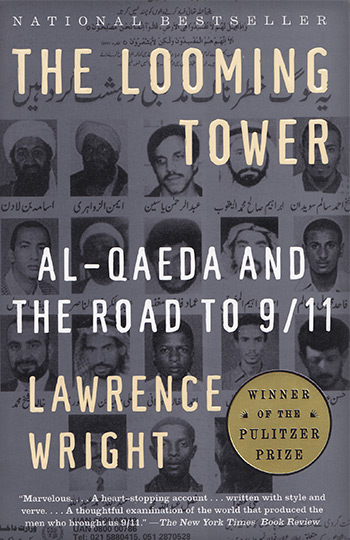
Pulitzer Prize-winning masterpiece that traces the path to 9/11, examining the rise of al-Qaeda and the intelligence failures that preceded the attacks. Essential reading for understanding modern terrorism.
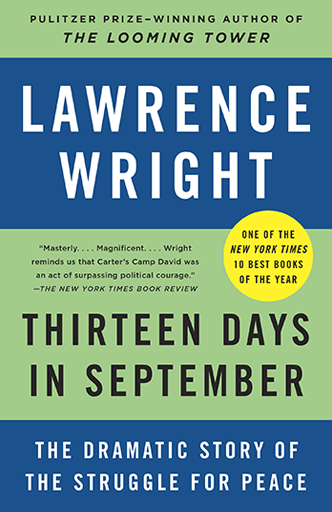
A gripping account of the 1978 Camp David Accords, where Carter, Begin, and Sadat negotiated a historic peace agreement. Provides crucial context for understanding Middle East diplomacy.
Video Interviews with the Author
In-depth conversation exploring Wright’s investigative journalism process and insights into Middle East conflicts.

Discussion of Wright’s work on terrorism, religion, and politics, offering perspective on the themes explored in The Human Scale.